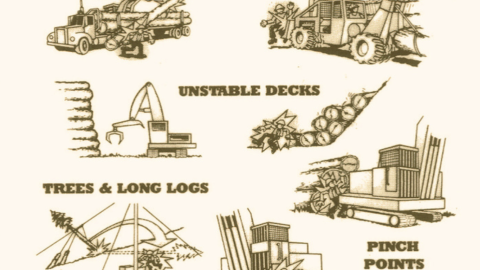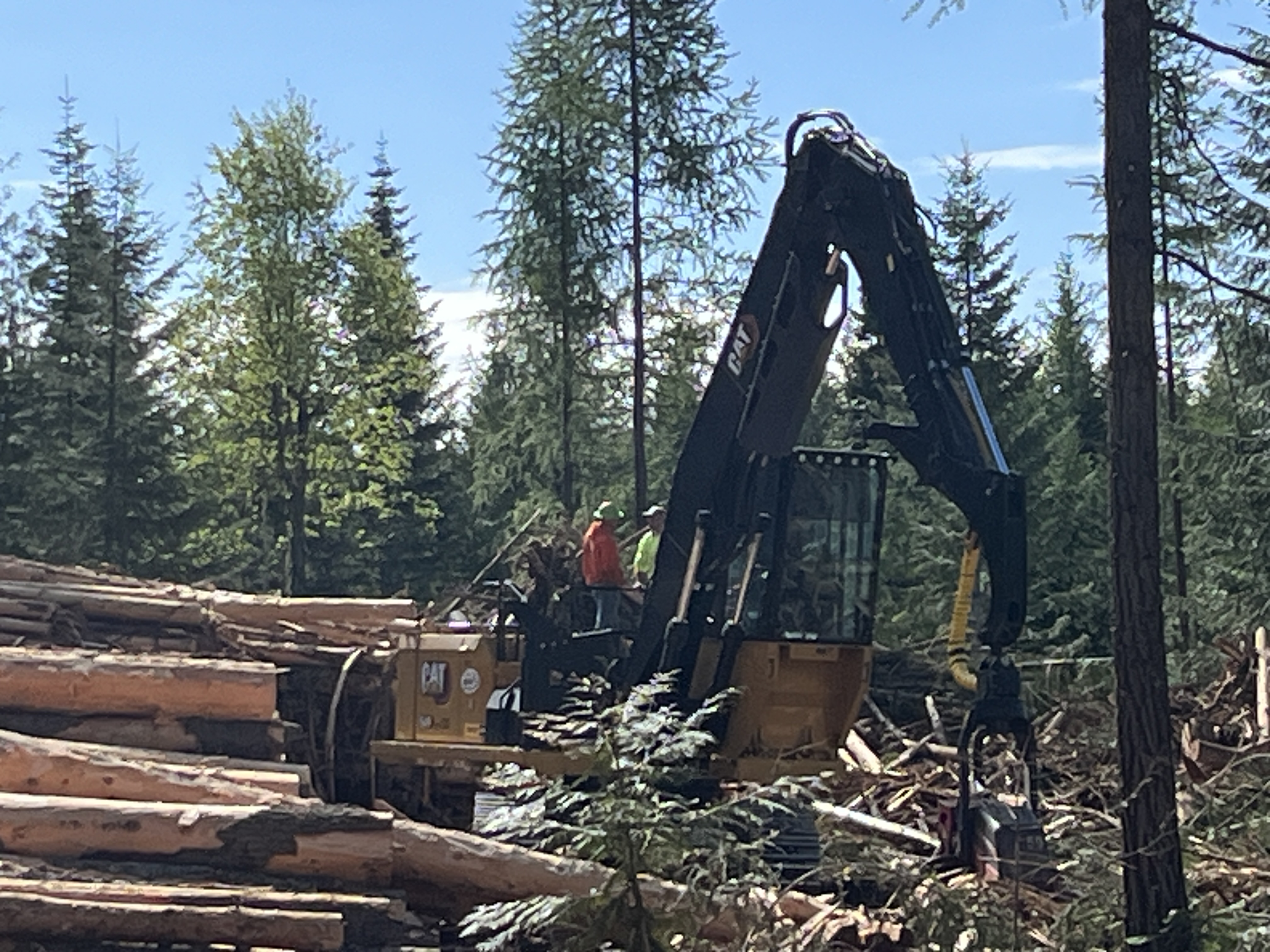
The forestry products sector is among the top 10 manufacturing employers in the US, and yet logging work is among the three most dangerous. Logging involves exposures to a wide variety of hazards, including work in close proximity to heavy equipment and trucks; tree falls, log movements and falling objects; ergonomic issues; hand-arm and whole-body vibration; noise; and environmental factors. The fatality rate for loggers recently averaged 99 deaths per 100,000 workers. This represents a steady decline in fatalities yet is still 28 times greater than the overall US rate. The Northwest states represent about 25-30% of total US logging employment. (US Bureau of Labor Statistics).
Logging is characterized by small businesses, comprising only 0.5% of all US employment, but accounts for 2% of all workplace fatalities. Smaller logging contractors have mortality risks ten times higher than larger firms. Injuries are also very common in logging. Learn more in this US Bureau of Labor Statistics' Beyond the Numbers article on logging.
The logging sector has emerged from the recession with a workforce substantially reduced in numbers and skills. Increased mechanization of logging is changing the nature of the hazards and is generally safer, yet there is a need to support a new workforce with the skills and knowledge to stay safe. Our forestry and logging research priorities are developed with the participation of logging stakeholders.
Selected Publications
- Oregon Tethered Logging Safety, Garland 2024 (PPT)
- Safety in Steep Slope Logging Operations, Garland 2021
- Forestry - Integrating Safety in a Time of Rapid Change, Harrington 2021
- Accident Analysis in Forestry: A practical field guide, Garland 2018 (PDF)
- Occupational Safety and Health in Forest Harvesting and Silviculture, Garland 2020
- Forest Worker Safety Review Newsletter Archive | PNASH
- Oregon Logging Accidents: Ten Years of Data, Fifty Years of Perspective, COFE, Garland 2024 (PPT)
- What NW Loggers Say will Improve Safety and Health, COFE, Harrington 2024 (PPT)
- Stress, Fatigue, and Injury Risk in Loggers and Log Truck Drivers: A Mixed Methods Study, Clonch 2023 (PPT)
- Hidden Hands: Latino Immigrant Forestry Services Workers in the Pacific Northwest, ISASH, Harrington et al 2024 (PPT)
- Healthy Living for Loggers: Maine Logger Health & Safety Study Team, Northeast Center for Occupational Health & Safety
PNASH Research
Tracking Agriculture, Forestry, and Fishing Health Indicators: RISC 2.0
NIOSH Funding Period 2022-2027 | Elena Austin, Sc.D.
Determinants of Stress, Fatigue, and Injury Risk for Loggers and Log Truck Drivers
PNASH Pilot Project 2021-2022 | Marissa Baker, PhD and June Spector, MD & MPH
Learn more