For small commercial fishing operations in the Gulf of Alaska and off the coasts of Washington and Oregon, the cost-effectiveness of immersion suit programs is a critical health and safety consideration for fishermen. These waters are dangerously cold—average water temperature can range from 30°F to 60°F—and without protective gear, survival time can be measured in minutes rather than hours.
Small commercial fishing operations face unique economic pressures that make mandatory immersion suit programs burdensome. A complete suit setup costs $500-$1,000 per crew member—a significant capital investment for vessels operating on tight profit margins. However, survival data from Coast Guard rescues demonstrate dramatic differences in outcomes. Immersion suits can extend survivable exposure time from 30-90 minutes to over 24 hours in cold-water conditions.
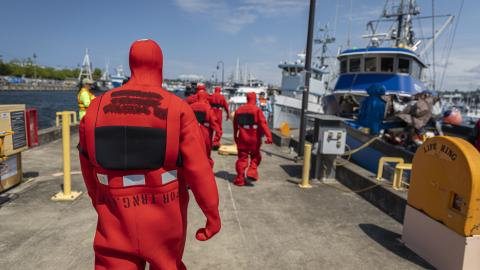
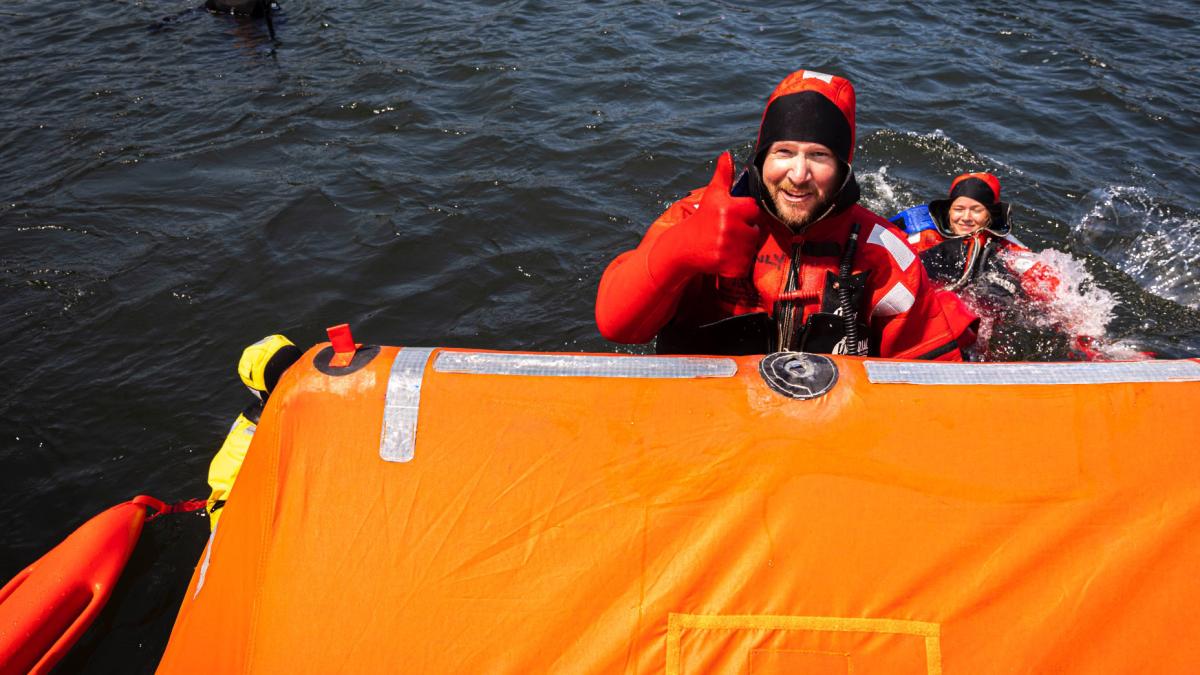
In October, the FV Valor III sank three miles west of Newport, Oregon, forcing two crew members into 53-degree water. The men were fortunate to have immersion suits aboard and time to don them before abandoning ship. These specialized survival suits help fishers stay afloat and retain body heat in emergencies, and are equipped with an attached light and whistle, with the vessel name printed on the back for identification. While the suits provided crucial protection, the cold October water still took its toll on those two crew members. Both men escaped without serious injury, despite visible signs of hypothermia.
Taunette Dixon, a spokesperson for the nonprofit Newport Fishermen’s Wives, said the outcome could have been much worse. “This was in good weather conditions, and there were lots of boats around.” (KGW-TV)
“Every year, something seems to happen. We are going into our opener with really high seas and high winds,” she said. “It’s going to be hard because some of the smaller boats won’t be able to handle those seas and winds.”
Dixon added that one of the immersion suits aboard the FV Valor III had been replaced earlier in the summer through the Newport Fishermen’s Wives immersion suit program—a detail that underscores the life-saving impact of community-supported safety initiatives.
Here’s the bigger picture: immersion suit programs are about way more than just staying safe out there. Vessels that suit up with comprehensive safety gear — including well-maintained immersion suits — can score lower insurance premiums and keep their best crew coming back, since seasoned fishers know a safety-first ship when they see one. The Coast Guard isn’t playing around either, ramping up enforcement after high-profile casualties and making compliance the only option. More research into rescue outcomes, survival rates, and economic ripple effects across the Pacific Northwest fishing fleet could be a transformative step for shaping smarter policies and industry best practices.
Stevens, Celine. “U.S. Coast Guard Rescues 2 Men after Fishing Vessel Sinks | Kgw.Com.” www.KGW.com, KGW-TV, www.KGW.com/article/news/local/us-coast-guard-rescues-men-fishing-vessel-sinks/283-051d4e6a-39e2-4a7f-ac7a-4993b4865b02.