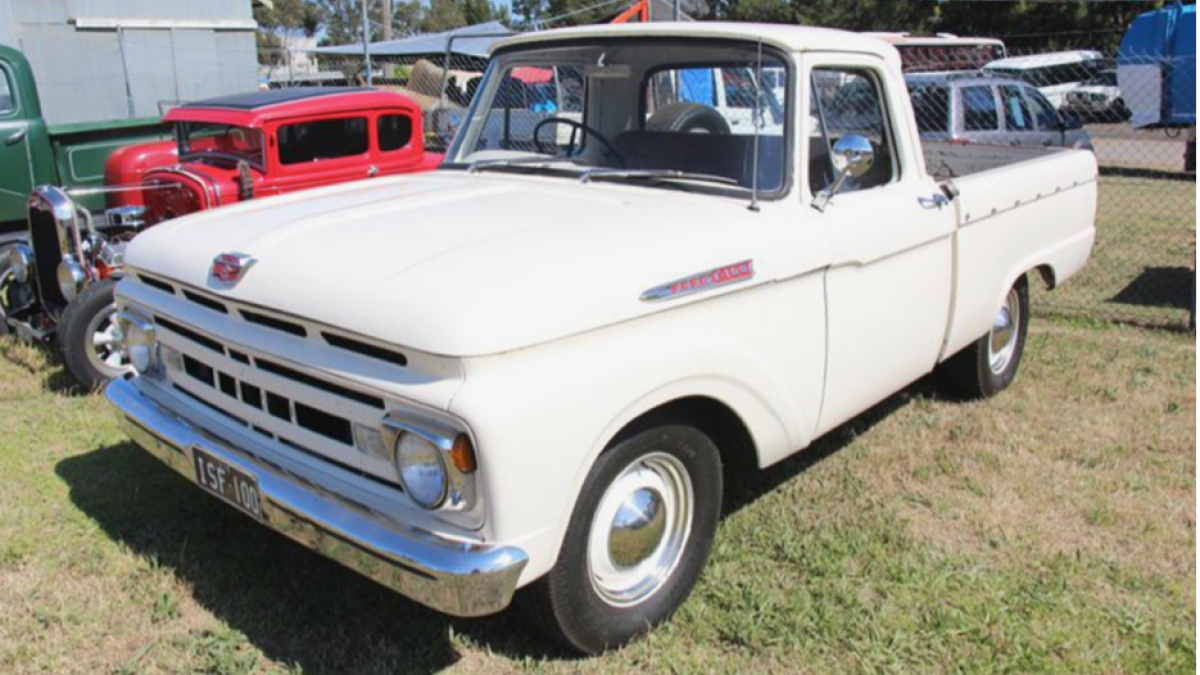
As a kid growing up on a farm, I learned to drive at age eleven. Each morning before school, I watered two herds of cattle: the south herd, a smaller show group of about 30 cows and calves, and the north herd, which included nearly 300 cattle and a massive bull named Dirty Face. I was always afraid of Dirty Face; his size was intimidating, but he was a beautiful animal. My morning routine began at the north field, where I turned on the water faucets. After that, I stopped by the barn to load twelve bales of alfalfa hay before heading to the south fields.
I accomplished all this in my trusty white steed—an old Ford truck with compound as its lowest gear. When I reached the south field, I turned on the water, then set the truck on a straight course. I’d climb out the window into the truck bed, break the baling wire by twisting it with a hay hook, and drop the hay into the field for the cattle. As I left, I shut off the water in the south field, then hurried back to the north field—always just in time to turn off the water before it overflowed.
Despite all this, my morning chores rarely took more than thirty minutes. Upon my return to the house, I showered quickly, grabbed breakfast, and caught the school bus at 7:35. When I returned from school, I completed my homework and returned to the field to water again, returning home in time for dinner.
These were quick tasks. I was able to accomplish these tasks in 30 minutes each morning. By law, I was not allowed to drive on the highway, but I did cross the highway twice each morning—a dangerous situation for an eleven-year-old. I could not sit and see over the steering wheel. I had to stand to drive the old Ford truck, which compromised my control and visibility. I will admit now that I hit more than one fence—clear warning signs of the risks I was taking. Yes, learning to drive on the farm made me a better driver. Before I had a driver’s license, I could drive a tractor, a hay truck (much larger than a pick-up), and a pick-up truck. I don’t tell you this story because I am promoting underage driving, but because I realize it happens on small family farms and we need to acknowledge the serious safety hazards involved. Looking back, I didn’t enjoy this task or think it was fun. I tended to it as a chore, not fully understanding just how dangerous it was—a perspective that concerns me now as an adult and compels me to share this story to promote childhood safety.
The PNASH AgInjury Report for the Third Quarter of 2025 underscores persistent hazards in the Pacific Northwest’s agricultural, fishing, and forestry sectors. Agricultural vehicle (AV) incidents accounted for 16 of the 55 total cases (29%), while fishing vessel (FV) incidents accounted for 15 cases (27%), and logging truck (LV) incidents accounted for another 16 cases (29%). These figures illustrate the significant risks that workers in these industries continue to face. It is important to note that these statistics are derived from publicly reported incidents found via Internet searches and may not capture the full scope of injuries occurring in the field.
Recommendations from the 2025 National Farm Safety and Health Week emphasize the importance of agricultural safety. On September 16, the spotlight was on Equipment and Rural Roadway Safety, with motorists receiving four important roadway safety tips:
- Remain vigilant. When approaching farm equipment, slow down and carefully assess whether it is safe to pass.
- Maintain a safe distance from the farm equipment ahead. This not only helps keep you out of the operator’s blind spots, but also ensures the farmer is aware of your presence.
- Pay close attention to the operator’s signals and communication. Farmers will often indicate when it is safe for motorists to pass.
- Pass only in legal zones and when it is completely safe. Always use your turn signal and check carefully for other vehicles that may also be passing or approaching from the opposite direction.
National Farm Safety and Health’s annual theme “Don’t learn safety by accident” is a great message for every stakeholder in the AgFF industry.